Author: Marcus Everett

Google’s October 2026 AI Content Guidance: The Editorial Checks That Separate Reliable Articles From Risky Ones

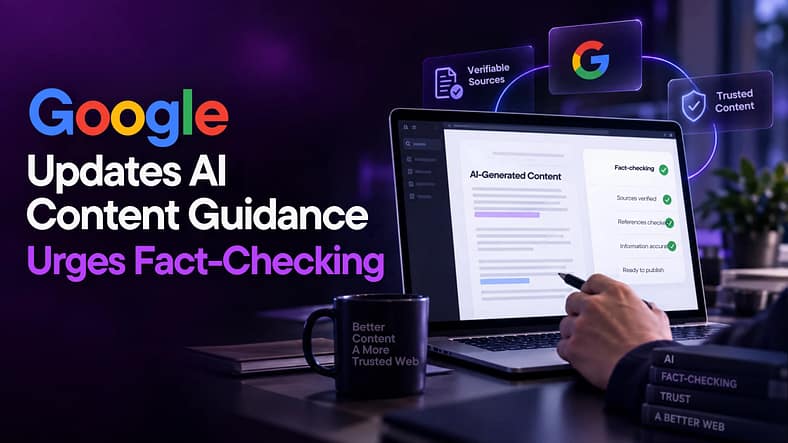
An AI-generated article can sound authoritative, contain convincing statistics, and still mislead readers. The Google AI content guidelines 2026 make one responsibility especially clear: publishers must verify what automated writing tools produce before that material reaches the public.

Google updated its generative AI content documentation on October 1, 2026, reinforcing expectations around accuracy, quality, relevance, and human review. For editorial teams, the practical challenge extends beyond correcting grammar or improving … Read the rest


Global Spam Update Link Building Practices

The Global Spam Update has made sustainable link building less about volume and more about whether a link would still make sense if rankings were not part of the discussion. For publishers, agencies, directories, writing services, community sites, and service comparison pages, that is a practical shift. Links need a clear editorial reason, accurate labeling, and a defensible relationship to the page where they appear.

This is not a promise … Read the rest

Content Performance After Google Spam Updates

The June 2026 spam update made content performance analysis more time-sensitive and less forgiving of vague diagnosis. As of October 10, 2026, that update was a completed event, so teams should treat it as a fixed historical marker rather than an active rollout. The practical task is not to guess what Google “wanted,” but to compare dates, page groups, search intent, and policy risk with enough discipline to avoid false … Read the rest

Content Link Building After Google Spam Shifts

Content Link Building now requires closer attention to the quality of the page carrying the link, not only the authority metric of the domain. After Google’s recent spam-policy emphasis on content violations, link campaigns should treat thin host pages, formulaic guest posts, and paid placements without clear attributes as search-risk signals rather than shortcuts.

The practical shift is simple but demanding: links cannot compensate for weak content environments. Google says … Read the rest

EEOC Data Proposal: Recruitment Content Risks

The EEOC Data Proposal issued on July 21, 2026 changed the risk profile for recruitment content teams that rely on workforce demographic reporting as evidence. It did not create a final rule in the research provided here, and it should not be treated as a settled change as of October 6, 2026. Still, the proposal gives recruiters, employer brand teams, and content strategists a practical reason to review how they … Read the rest

Spam Policy Changes and On-Page SEO Risk

Google’s spam policy changes in 2026 gave on-page SEO teams a clearer reason to review content behavior, page purpose, and user experience together. The main issue is not only whether a page contains keywords, AI-assisted text, or affiliate elements. The safer question is whether the page helps a visitor directly, or whether it was built mainly to manipulate search visibility.

As of October 5, 2026, the most useful reading is … Read the rest

Local SEO Adjustments After 2026 Google Updates

Local SEO adjustments became more operationally sensitive after Google clarified new Google Business Profile edit handling on September 23, 2026. The change was not a full rewrite of local search, but it did create a tighter review window for business owners and a stronger reason to keep local pages, service details, photos, reviews, and profile data aligned.

The practical issue is control. Local visibility depends partly on information that appears … Read the rest

FTC Amazon lawsuit: Content Provider Risks

The FTC Amazon lawsuit filed on August 31, 2026, is directly relevant to advertisers, sellers, agencies, and content teams that use paid placements to support product visibility. The case is still at the allegation stage, so content providers should avoid treating the claims as proven facts. The practical issue is narrower and more immediate: if a platform’s auction mechanics are less predictable than advertised, campaign forecasts, margin assumptions, and content … Read the rest

On-Page SEO Tactics After Google Updates

On-Page SEO Tactics need a stricter quality standard after Google’s 2026 updates. The safest response is not to chase one ranking factor, but to reduce weak pages, match search intent more directly, and make every claim easier for readers and crawlers to evaluate.

That is a practical shift for mixed-utility sites: service comparisons, writing and publishing resources, nonprofit pages, directories, arts projects, and education content all face the same risk … Read the rest

Link Building Volatility: Safer SEO Practices

Link Building Volatility has become a practical concern for site owners who saw rankings move during Google’s 2026 core and spam updates. The safest response is not to chase every short-term movement. It is to reduce avoidable link risk, improve source quality, keep anchors natural, and measure whether a ranking drop reflects a real trend or temporary noise.

That cautious approach matters for service comparison sites, writing businesses, directories, community … Read the rest