Author: Olivia Barrett

Google Business Profile Updates for Better Visibility

Google Business Profile visibility work changed in 2026, but the practical goal stayed the same: give searchers accurate, specific, current information they can trust. As of October 15, 2026, the strongest use of newer features is not to automate every profile task. It is to reduce missed updates, make service details clearer, and review performance signals with care.

That distinction matters for local businesses, publishers, service directories, and multi-location teams. … Read the rest

Link Profile Cleanup After Google’s Spam Updates

The recent wave of Google spam updates has made link profile cleanup a practical risk-control task rather than a cosmetic SEO exercise. Based on the supplied research, Google’s June 2026 Spam Update rolled out globally from June 24 to June 26, 2026, and that rollout had already concluded before October 15, 2026. Treating it as a completed event matters because teams should now be reviewing evidence, not describing the update … Read the rest

AI Summaries Traffic: Organic Click Adjustments

As of October 1, 2026, AI Summaries Traffic has become a practical reporting problem for content teams that depend on informational search. The strongest available evidence does not support panic, but it does support a measured change in how organic performance is planned, written, and judged. If Google answers more informational searches directly on the results page, content teams need to separate visibility, source credibility, qualified visits, and conversions instead … Read the rest

Build a Resilient Link Profile After Updates

A resilient link profile is not built by replacing one batch of risky links with another. After Google’s 2026 spam activity, the safer route is slower and more evidence-led: audit what already exists, reduce signals that look artificial, and earn links that make sense even without search rankings as the main incentive.

The timing matters. Google’s June 2026 spam update ran from June 24 to June 26, 2026, globally across … Read the rest

AI Query Reporting For Better Content Plans

Microsoft Clarity has moved AI Query Reporting from a speculative SEO talking point into a practical measurement area for content teams. The tool now gives site owners more than referral counts: it can show cited pages, grounding queries, topic groupings, branded and non-branded query segments, and share-of-authority signals. Those signals can help planning, but they should not be treated as a direct substitute for rankings, revenue data, editorial judgment, or … Read the rest

Video Keyword Research for YouTube/Shorts: Titles, Chapters, and Repurposing to Web

Standing out on YouTube is tough. It’s a crowded place, and getting views is hard.

The key to success is using the right words. It’s not just about guessing what people might search for.

YouTube searches are different from Google searches. People have a “watch intent” instead of a “read intent.” They ask questions or describe what they want to see.

Video SEO is key here. It’s a special skill … Read the rest

June 2026 Spam Update: Link Building Risks

The June 2026 Spam Update changed how cautious SEO teams should think about link building, even though the update was not reported as a link-spam action. For content marketers, service comparison sites, directories, nonprofit networks, and writing-focused publishers, the practical lesson is narrow but serious: links should support editorial value, not exist mainly to influence rankings or generative AI citations.

This assessment is based only on the supplied research and … Read the rest

International Keyword Research: Language Nuance, Local SERPs, and Market Fit

To grow online globally, you need more than just translating keywords. You must do effective international SEO keyword research to really enter the market.

This effort, known as i18n SEO, is a key business strategy. It goes beyond setting up tech to grow in new areas.

At its core is localization. This means making your content fit cultural, language, and context preferences. It makes sure your message connects … Read the rest

Competitor Intent Gap Analysis: Beat Rivals by Matching Format, Not Just Keywords

You’ve done the keyword research. You’re targeting the same terms as your top rivals. Yet, your page lingers on page two while theirs dominates. This is a common and frustrating scenario in SEO.

The root cause is often a competitor intent gap. Traditional competitive analysis stops at keyword lists. It misses what users and Google truly reward for a query.

Winning pages don’t just contain keywords. They match the … Read the rest

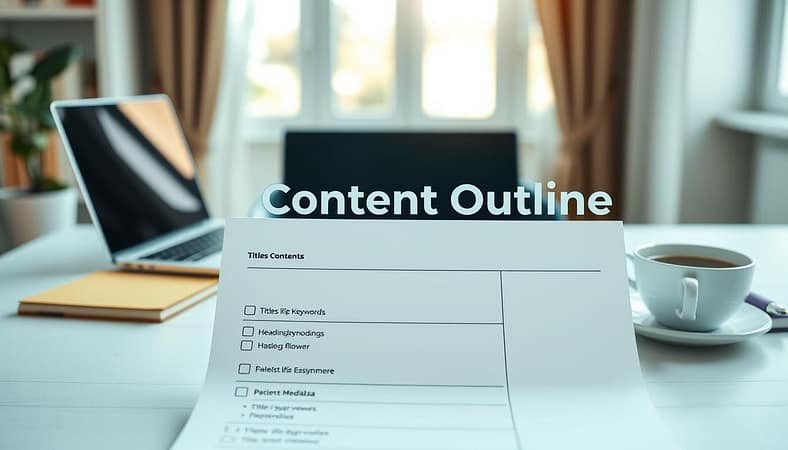
The Perfect SEO Content Outline for Essays and Blog Assignments

Creating effective web content is more than just having good ideas. It needs a well-planned structure that pleases both search engines and readers.

The journey starts with an SEO content brief. This document outlines all the necessary details. It helps the writer, keeps everyone on the same page, and cuts down on rewrites.

Next, a content outline is created. It’s a detailed plan that organizes sections, headings, and keywords … Read the rest