
Ever wonder why Google sometimes feels like a mind reader? It’s not magic – it’s understanding user intent. Think of it like ordering at a bar.
Some people want the cocktail menu explained. Others know exactly which brand they want. Some are comparing top-shelf options. Then there’s that guy slamming his credit card shouting “just give me the damn drink!”
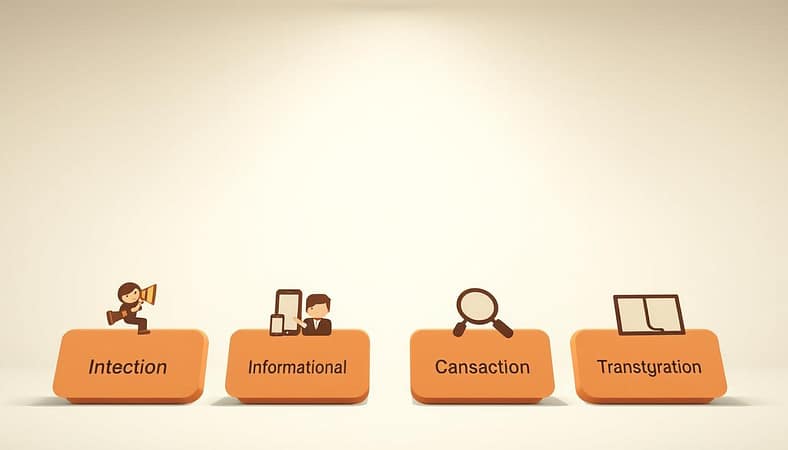
Google obsesses over this stuff more than I obsess over perfect metaphors. They categorize queries into four distinct query type patterns: informational, navigational, commercial, and transactional.
It’s not just about categorizing searches. It’s about understanding the complex human motivations behind those search bars. Why someone searching “quick kale recipes” will bounce faster than a bad check if your content takes an hour to read.
Even pizza searches reveal different intents – from history lessons to immediate delivery. The layers of desire behind simple queries might surprise you.
How to Identify Intent
Ever feel like you’re trying to crack the Da Vinci Code of search queries? Welcome to the digital detective agency. Here, we uncover what users really want behind those Google searches.
Our first clue is in the SERPs. The top 10 results aren’t random. They’re Google’s answer to what users want. Look for patterns: Are they all product pages? Tutorial videos? That tells you a lot.

Next, become a linguistic profiler. Query modifiers reveal search intent. “Best” means commercial intent. “How to” shows informational need. “Buy now” means someone’s ready to buy.
My toolkit includes:
- SERP feature analysis (those People Also Ask boxes are pure gold)
- Keyword modifier identification
- Semantic search interpretation
- Tool-based analysis like Keyword Overview’s intent widget
I learned the hard way that assuming intent is risky. Once, I thought “SEO strategy” meant case studies. But everyone wanted high-level overviews. Don’t make my $64,000 mistake.
Mastering keyword search intent analysis makes you a mind-reader. The SERPs are talking – we just need to learn their language.
Mapping Keywords to Content
Think of keyword-to-content mapping as finding the perfect match for your audience. It’s not just about pairing search terms with pages. It’s about creating digital matches that feel right.
But, if you get it wrong, it’s like setting up a vegan at a steakhouse. It’s awkward for everyone.
The key is content format matching. If Google shows calculators for “mortgage calculator,” your essay won’t cut it. You need to give people what they actually want, not what you think they should want.

Intent layering is what separates the pros from the amateurs. For “how to start a vegetable garden,” it’s not just about the basics. It’s about soil, pests, and avoiding mistakes.
It’s like realizing “I want to learn guitar” means more than just chords. It’s about theory, maintenance, and not looking silly at parties.
Here’s how to map like a pro:
- Analyze top-ranking content structures – are they lists, guides, tools, or reviews?
- Identify coverage gaps in competitor content like a film critic spotting plot holes
- Address the full spectrum of user intent, not just the surface-level ask
- Create that magical 1:1 match where users think “finally, someone gets me!”
Competitor analysis isn’t about copying. It’s about understanding why certain content works. Notice the tone, depth, and angles that resonate. Then outdo them by addressing what they missed.
It’s like watching all three Lord of Rings films to understand why Return of the King’s ending worked so well.
The holistic approach sees SEO mapping as connective tissue. Each piece of content should feel like the next step in the user’s journey. When you nail this, you’re not just ranking – you’re building relationships that convert casual searchers into loyal readers.
Remember: Great mapping creates that “aha!” moment where users find exactly what they needed before they even knew they needed it. That’s not just good SEO – that’s digital clairvoyance.
Optimizing for Intent
Intent optimization is key to standing out in SEO. It’s about making sure your content meets user needs. It’s like serving a meal that wows your guests.
Good user experience is essential. Google penalizes sites with poor UX. Avoid popups that disrupt reading. They’re like spoilers ruining a movie.
Choosing the right font size is important. Use 14px+ fonts to respect your readers’ eyes. It’s like serving steak with a proper utensil.
Organize your content with clear subheadings. This lets users quickly find what they need. It’s like a map to a treasure.
Metadata is like a movie trailer for your content. Your title tags and meta descriptions should match what users expect. For example, “best wireless router 2024” should offer specs and prices.
Commercial intent queries need specific content. Users looking for “cisco wifi router” or “buy iphone 15” want product pages. It’s like sending someone to a steak restaurant when they asked for a cooking class.
Navigational queries are about finding specific websites. Your job is to make this easy. These queries get a lot of views but few clicks, as users find what they need fast.
Here’s how different query types demand different optimization approaches:
| Query Type | User Expectation | Optimal Content Format | UX Priority |
|---|---|---|---|
| Commercial | Products/prices | Product pages, comparison charts | Fast loading, clear CTAs |
| Informational | Answers/education | Blog posts, guides, tutorials | Readability, skimmability |
| Navigational | Specific destination | Clear pathways, minimal clutter | Simplified navigation |
| Transactional | Completion action | Checkout pages, forms | Frictionless process |
Analytics monitoring is key to optimization. Watch bounce rates closely. If users leave quickly, your content isn’t meeting their needs.
Optimizing for user intent means creating content that satisfies users fully. It’s not just about rankings. It’s about making users happy.
Tools for Analysis
Forget crystal balls – modern SEO tools offer better insights into user psychology than my therapist gets from our 50-minute sessions. The right arsenal transforms user intent analysis from speculative art to exact science.
Let’s start with the holy trinity: Semrush, Moz Pro, and Ahrefs. Semrush’s Keyword Overview shows intent categorization at a glance – it’s like having a mood ring for your audience’s search behavior. Their data reveals whether users want to buy, learn, or just window-shop digitally.
Moz Pro’s Keyword Explorer lets you filter by intent type with the precision of a sommelier selecting wines. Want only transactional queries? Moz delivers. Need informational content ideas? They’ve got you covered. This tool understands user intent better than most people understand their own dating app bios.
Ahrefs takes SERP analysis to forensic levels. Instead of manual Google searches that consume more time than explaining TikTok trends to my parents, Ahrefs shows top-ranking pages, their intent signals, and content patterns. It’s like getting the answer key before the test.
The real magic happens with intent identification widgets and featured snippet trackers. These tools uncover those goldmine “People Also Ask” questions that most marketers ignore like last season’s Netflix specials. They reveal the actual questions real humans type into search bars – the raw, unfiltered user intent that content should address.
Featured snippet tracking deserves its own standing ovation. These tools monitor position zero opportunities – those precious answer boxes that capture more clicks than a viral cat video. They show exactly what queries trigger featured snippets and what content format wins that coveted spot.
Then there’s visibility monitoring for AI platforms. Because nothing hurts more than being ghosted by ChatGPT harder than my last Hinge match. These tools ensure your brand appears in AI responses, monitoring your visibility across emerging platforms where traditional SEO metrics might not apply yet.
The best part? These tools speak the language of data but translate it into actionable insights. They don’t just show you what people search for – they reveal why they search, how they search, and what content will actually satisfy their digital cravings. That’s the power of proper SEO tool mastery.
Real-World Examples
Let’s talk about search intent optimization in real terms. Theory is great, but it’s results that matter. My “backlinks” guide was struggling until I figured out the query type was for beginners.
I rewrote it for newbies, and suddenly it hit the top 5 rankings. Sometimes, you need to simplify to improve your SEO.
The “SEO audit” keyword showed me about dual intent. Some wanted software, others wanted processes. I focused on the procedural approach, and traffic soared.
Commercial intent is key. “Best backlink checker” and “backlink checker” are different. I created a tool for both, satisfying all types of users. It’s like serving steak and salad together.
These aren’t just ideas – they’re proven strategies. The key is to think like the person searching at 2 AM. Your SEO will improve greatly.